Honeysuckle
Lonicera periclymenum
Print fact sheet (PDF)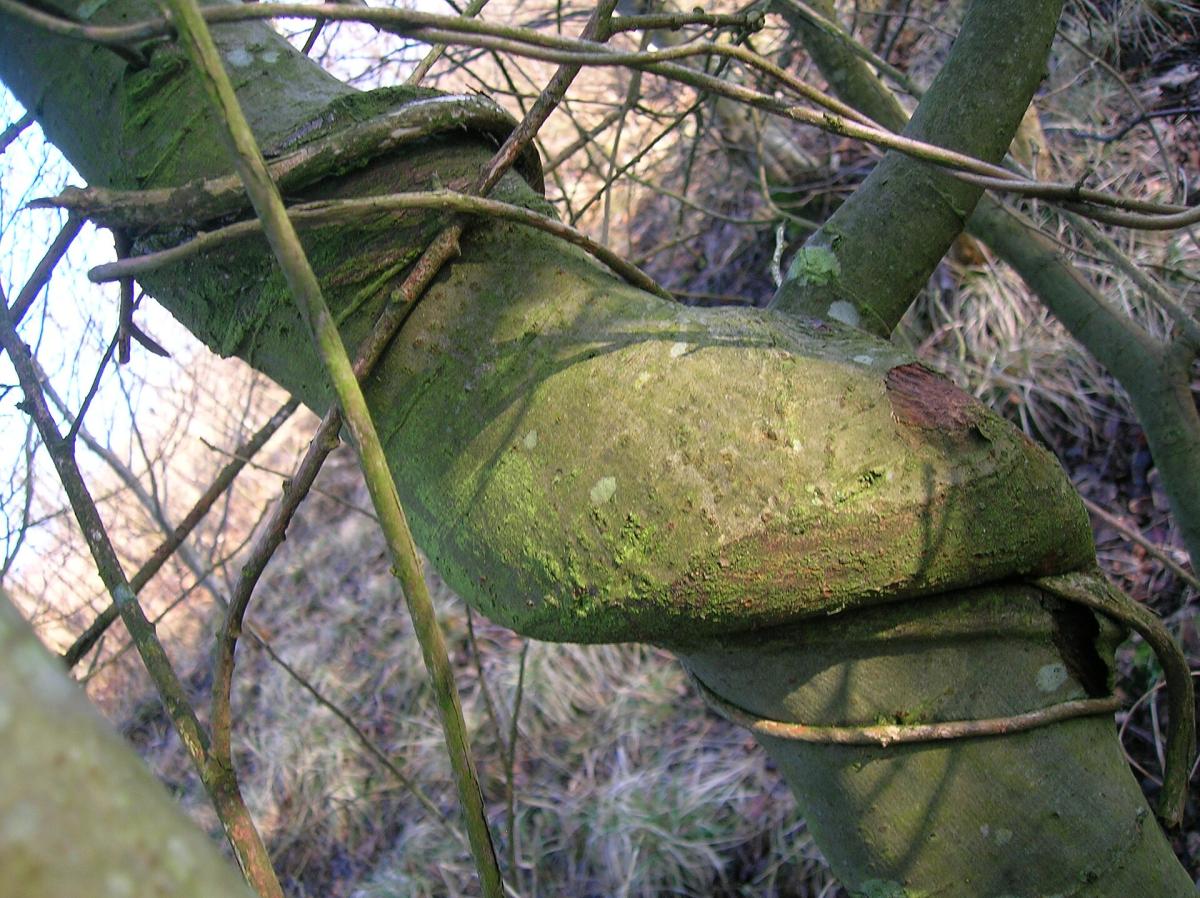
Saves its scent for the evening, when the moths it needs are flying.
A woody climber of hedgerow and woodland edge, twining clockwise up other shrubs, with paired oval leaves and whorls of long tubular flowers in cream and yellow, often flushed pink or red outside. Red berries follow in autumn. Honeysuckle is common around Dumfries, and is far more often smelled than seen — the scent carries a long way on a still evening.
Behaviour
The flowers are strongly scented at dusk and into the night, and their long tube can only be reached by long-tongued pollinators — chiefly hawk-moths, and by day the garden bumblebee. The stems twine so tightly around a young sapling that they can leave it permanently spiralled; such twisted 'barley-sugar' sticks were once prized for walking canes.
When to see it
Quick facts
- Family
- Honeysuckles (Caprifoliaceae)
- Height
- Climbs to 7 m
- Status
- Native; common in hedgerow and woodland edge
Public domain, via Wikimedia Commons