Common Reed
Phragmites australis
Print fact sheet (PDF)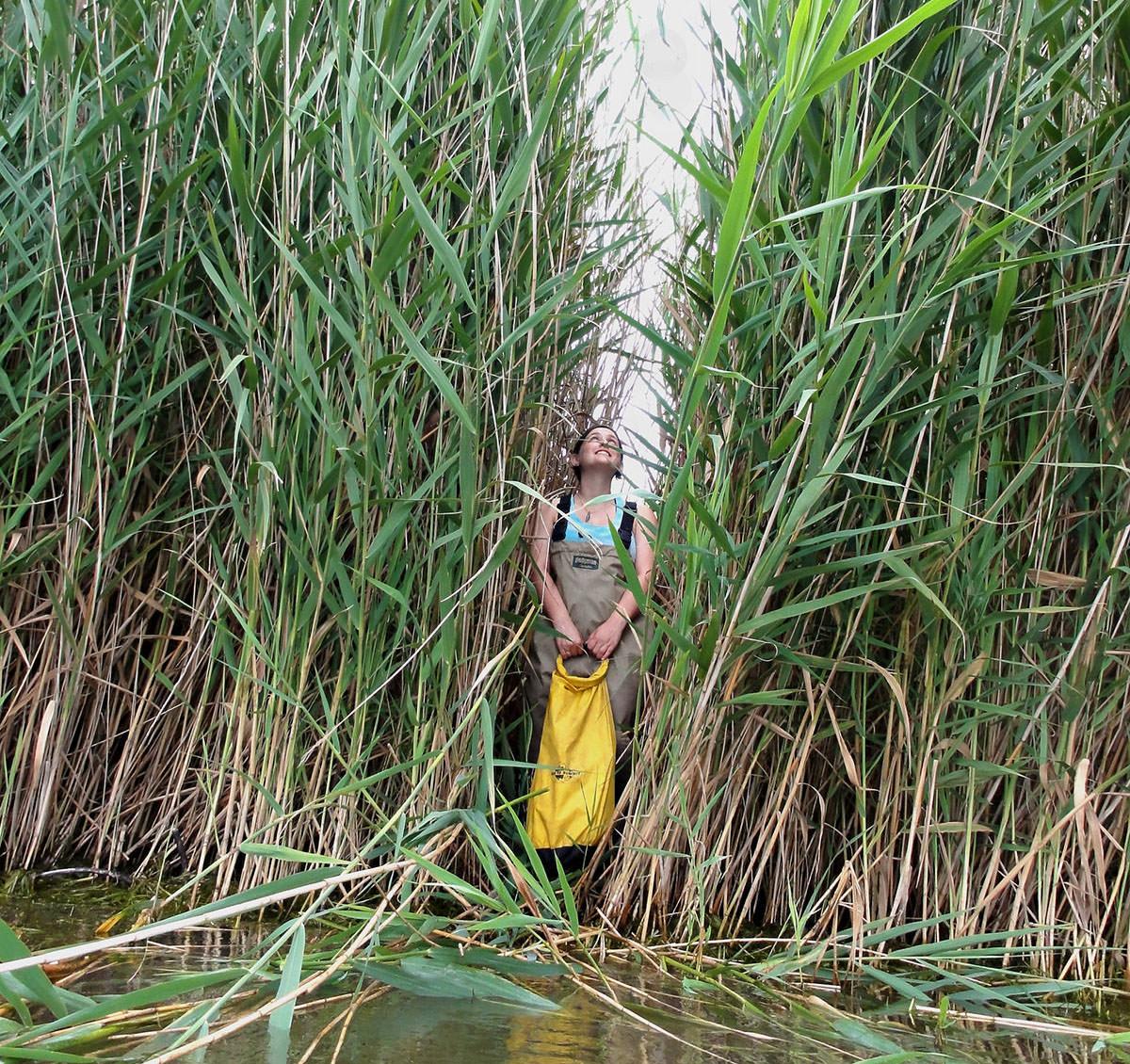
The tallest grass in Britain, and the plant that builds an entire habitat around itself.
A tall, robust perennial grass forming dense beds in shallow water and marshy ground, with broad grey-green leaves and soft purplish feathery flower plumes in late summer that fade to buff and persist all winter. Common reed builds the reedbeds of the Solway marshes and loch margins around Dumfries.
Behaviour
It spreads by thick rhizomes that grow out into open water, so a reedbed advances steadily and can convert open water to fen over time. Reedbed is a habitat in its own right, holding reed buntings, sedge and reed warblers, water rail and roosting starlings and swallows. Reed has been cut for thatch for millennia, and cutting on rotation is how reedbeds are kept in condition.
When to see it
Quick facts
- Family
- Grasses (Poaceae)
- Height
- Up to 3.5 m · Britain's tallest grass
- Status
- Native; forms the region's reedbeds
Photo by NASA Goddard Space Flight Center from Greenbelt, MD, USA, CC BY 2.0, via Wikimedia Commons