Sika Deer
Cervus nippon
Print fact sheet (PDF)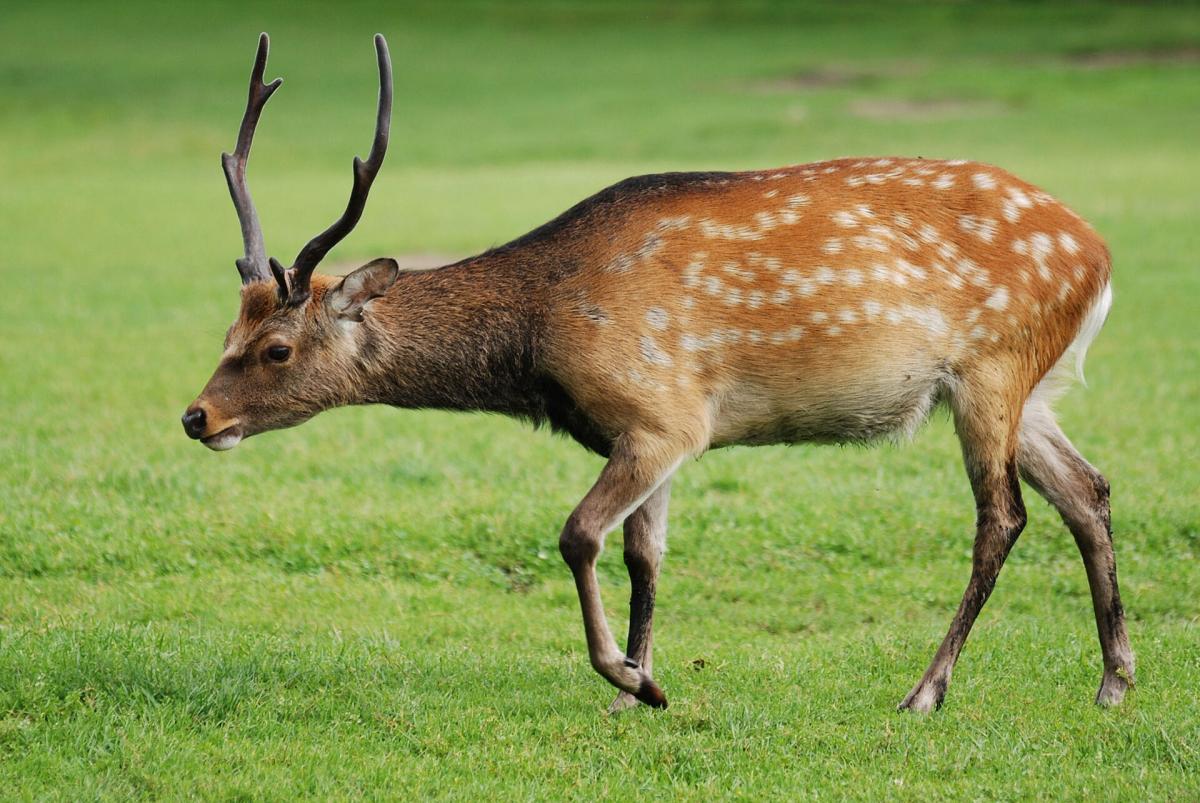
Introduced from East Asia, and now interbreeding with red deer — which is the real problem.
A medium-sized deer, chestnut with white spots in summer and dark, almost black-brown in winter, with a distinctive white rump patch bordered black and a pale 'furrowed brow' marking on the forehead. Sika were introduced to Britain from Japan and East Asia in the nineteenth century and have established themselves in the forests of south-west Scotland, including parts of Dumfries and Galloway.
Behaviour
Sika favour dense conifer plantation and are more secretive than red deer, feeding at the woodland edge at dusk. The rutting call is remarkable — a series of drawn-out, eerie whistles quite unlike a red deer's roar. Their conservation significance here is genetic: sika and red deer hybridise readily and produce fertile offspring, so the introduced species threatens the genetic integrity of native red deer.
When to see it
Quick facts
- Family
- Deer (Cervidae)
- Size
- Shoulder height 70–95 cm
Photo by Lilly M, CC BY-SA 3.0, via Wikimedia Commons