Polecat
Mustela putorius
Print fact sheet (PDF)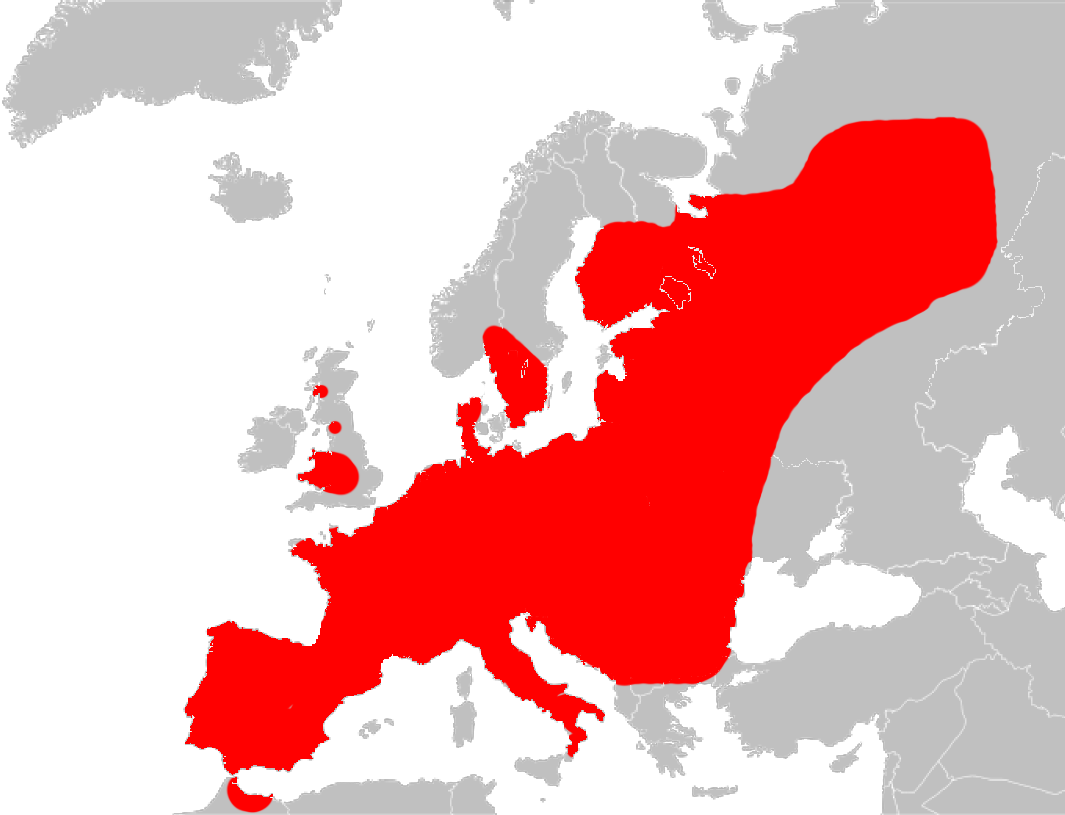
The wild ancestor of the domestic ferret, wearing a dark bandit's mask.
A medium-sized mustelid with dark guard hairs over a creamy-buff undercoat, giving a two-tone look, and a distinctive facial mask — dark around the eyes with white patches on the muzzle and behind the ears. Polecats were reduced to a small population in Wales by persecution and have been spreading back across Britain, and animals are now recorded in south-west Scotland.
Behaviour
Polecats hunt at night along hedgerow, farmland and woodland edge, taking rabbits, rats, amphibians and birds, and will store surplus kills in a larder. They are the wild ancestor of the domestic ferret, and the two interbreed readily, so some animals seen are ferret hybrids with paler, less well-defined masks. Like other mustelids they use scent heavily, and the species' old name — foumart, 'foul marten' — reflects it.
When to see it
Quick facts
- Family
- Mustelids (Mustelidae)
- Size
- Body 32–45 cm plus a 12–19 cm tail
- UK status
- Protected; recolonising after historic persecution
Public domain, via Wikimedia Commons