Nathusius' Pipistrelle
Pipistrellus nathusii
Print fact sheet (PDF)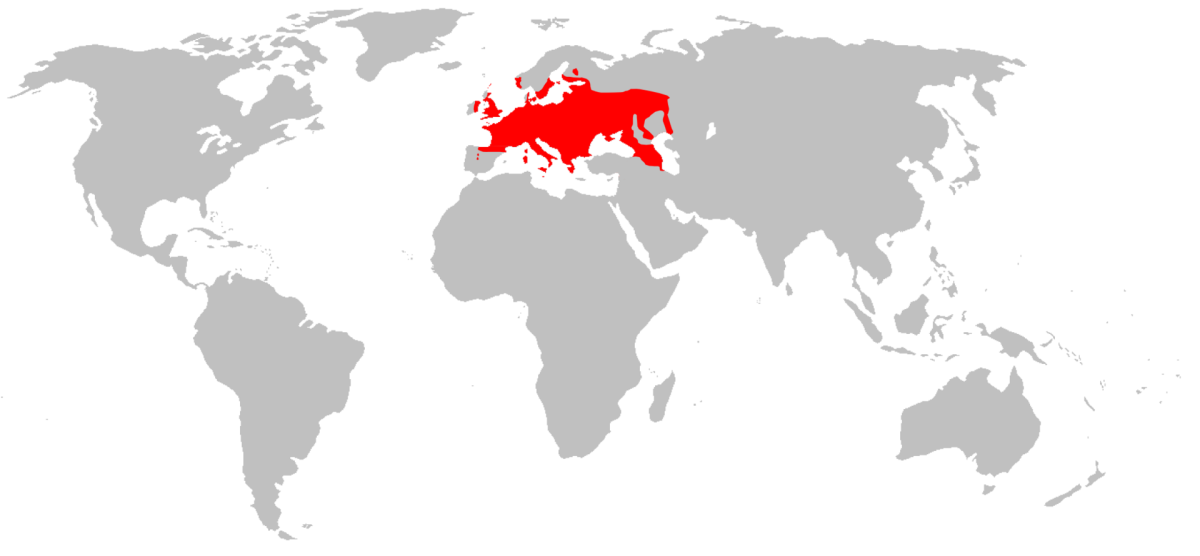
A bat that crosses the North Sea — ringed individuals have flown here from the Baltic.
The largest of the British pipistrelles, with longer, shaggier fur than its relatives, a broader wing and a lower echolocation frequency of around 39 kHz. Nathusius' pipistrelle is scarce and patchily recorded in Britain, strongly associated with water — lochs, large ponds and wooded river corridors — and is most likely to be picked up around the Nith and the region's lochs with a bat detector.
Behaviour
It hunts midges and small flies low over open water and along woodland edge, often ranging further from the roost than other pipistrelles. What sets it apart is migration: ringing has shown individuals travelling well over a thousand miles between the Baltic and Britain, making it one of very few genuinely migratory bats in Europe and the only one likely to be recorded locally.
Migration
Nathusius' pipistrelles breed across eastern and central Europe and move west and south in autumn. Ringed bats have been recovered in Britain having crossed the North Sea from Latvia and the Netherlands — a journey of well over a thousand miles by an animal weighing about nine grams.
When to see it
Quick facts
- Family
- Vesper bats (Vespertilionidae)
- Size
- Wingspan 22–25 cm · echolocates at around 39 kHz
- UK status
- Protected under UK and European law; scarce and migratory
Photo by Carlosblh, CC BY 3.0, via Wikimedia Commons