Harbour Porpoise
Phocoena phocoena
Print fact sheet (PDF)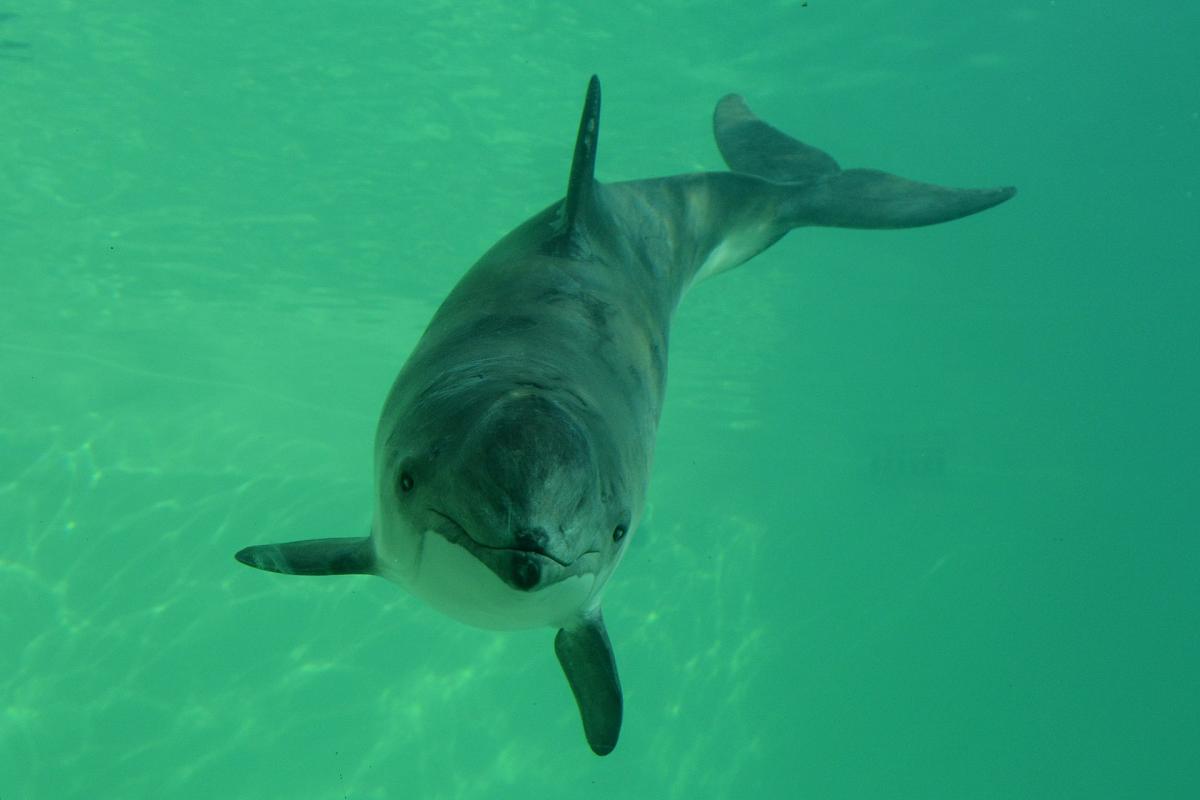
A small triangular fin rolling once through flat water — no leaping, no show, and gone.
Britain's smallest and commonest cetacean: a compact, dark grey porpoise with a small, blunt, beakless head and a low triangular dorsal fin. Harbour porpoises are seen in the Solway Firth and along the Galloway coast throughout the year. They are easy to miss — they surface briefly and undemonstratively, without the leaping and bow-riding that dolphins go in for.
Behaviour
Porpoises hunt fish using high-frequency echolocation clicks well above human hearing, feeding on herring, sandeel, whiting and other small fish. They usually travel alone or in twos and threes rather than large pods. Calm, flat seas are essential for spotting them — the small fin disappears completely in any chop — and the best chance is on a still morning from a headland or the shore.
When to see it
Quick facts
- Family
- Porpoises (Phocoenidae)
- Size
- 1.4–1.9 m long · Britain's smallest cetacean
- UK status
- Fully protected; the commonest cetacean in British waters
Photo by Ecomare/Salko de Wolf, CC BY-SA 4.0, via Wikimedia Commons