Grey Seal
Halichoerus grypus
Print fact sheet (PDF)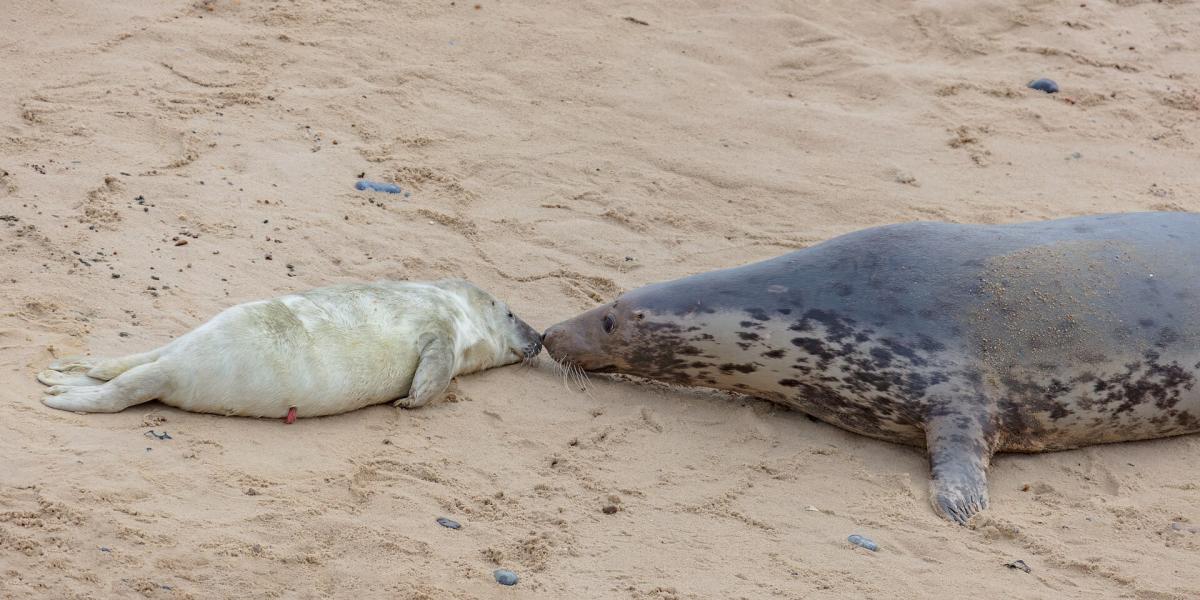
The long straight 'Roman nose' separates it at a glance — and Britain holds much of the world population.
Larger and heavier than the common seal, with a long, straight, sloping muzzle — the 'horse-head' of its scientific name — and parallel rather than V-shaped nostrils. Bulls are much bigger than cows and heavily scarred about the neck. Grey seals are seen along the Solway coast and hauled out on rocks and sandbanks, and Britain holds a substantial share of the entire world population.
Behaviour
Grey seals feed on fish and take a wide range of prey, diving deeper and longer than common seals. Pupping is in autumn, and grey seal pups are born in a thick white coat that is useless in water — so unlike common seals they must be born above the tideline and stay ashore for around three weeks, fed on extraordinarily rich milk, before moulting and taking to the sea.
When to see it
Quick facts
- Family
- True seals (Phocidae)
- Size
- 1.8–2.6 m long · bulls up to 300 kg
- UK status
- Protected under the Marine (Scotland) Act; Britain holds much of the world population
Photo by Diego Delso, CC BY-SA 4.0, via Wikimedia Commons