Common Seal
Phoca vitulina
Print fact sheet (PDF)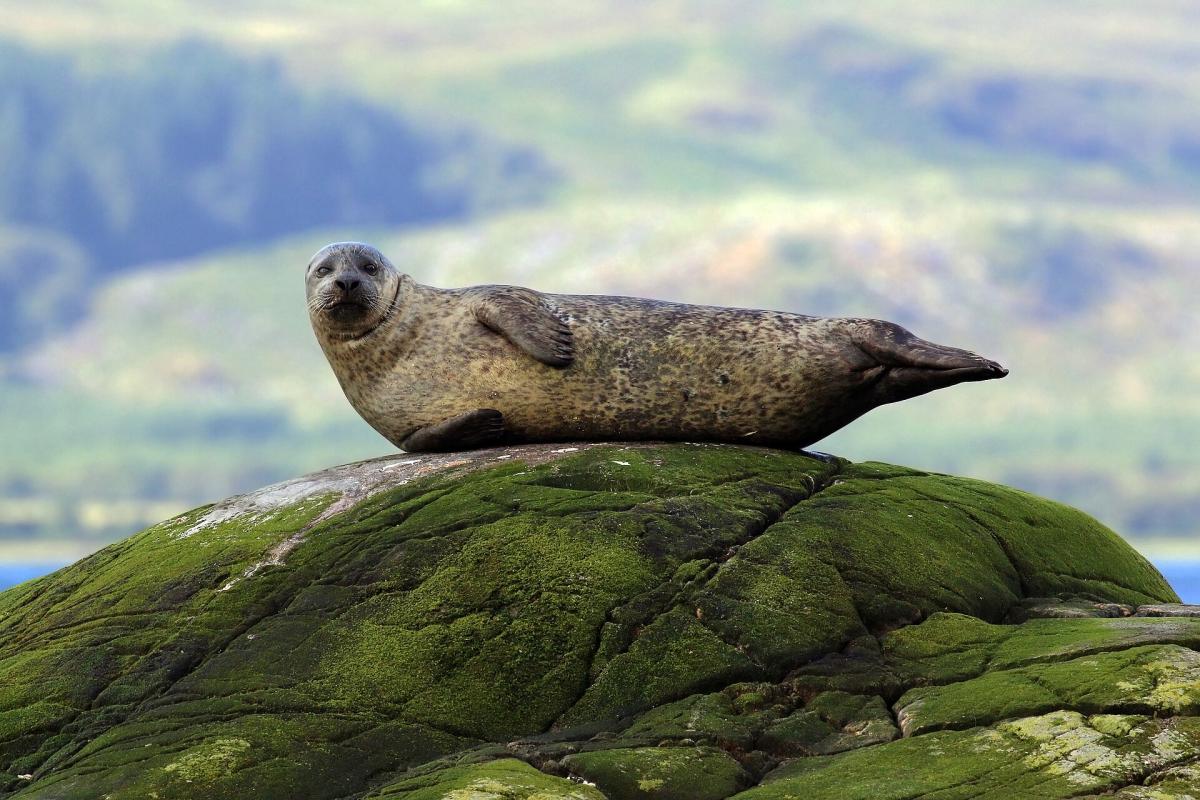
Round head, V-shaped nostrils and a banana pose on the sandbank — smaller and rarer here than the grey.
Also called the harbour seal, this is the smaller of Britain's two seals: a rounded, cat-like head with a short concave muzzle and nostrils that meet in a V, and a coat of mottled grey-brown. Common seals use the Solway Firth, hauling out on sandbanks and mudflats at low tide. Despite the name they are considerably less numerous around Scotland than grey seals, and some regional populations have declined sharply.
Behaviour
Common seals haul out to rest, moult and give birth, often lying in a distinctive 'banana' posture with head and tail raised clear of the wet sand. Pups are born in June and July and can swim within hours of birth — unlike grey seal pups, they must, because the tide reclaims the sandbank. They feed on fish, squid and crustaceans, diving for several minutes at a time.
When to see it
Quick facts
- Family
- True seals (Phocidae)
- Size
- 1.4–1.9 m long · weighs 80–130 kg
- UK status
- Protected under the Marine (Scotland) Act; declining in some regions
Photo by Charles J. Sharp, CC BY-SA 4.0, via Wikimedia Commons