Lesser-spotted Catshark
Scyliorhinus canicula
Print fact sheet (PDF)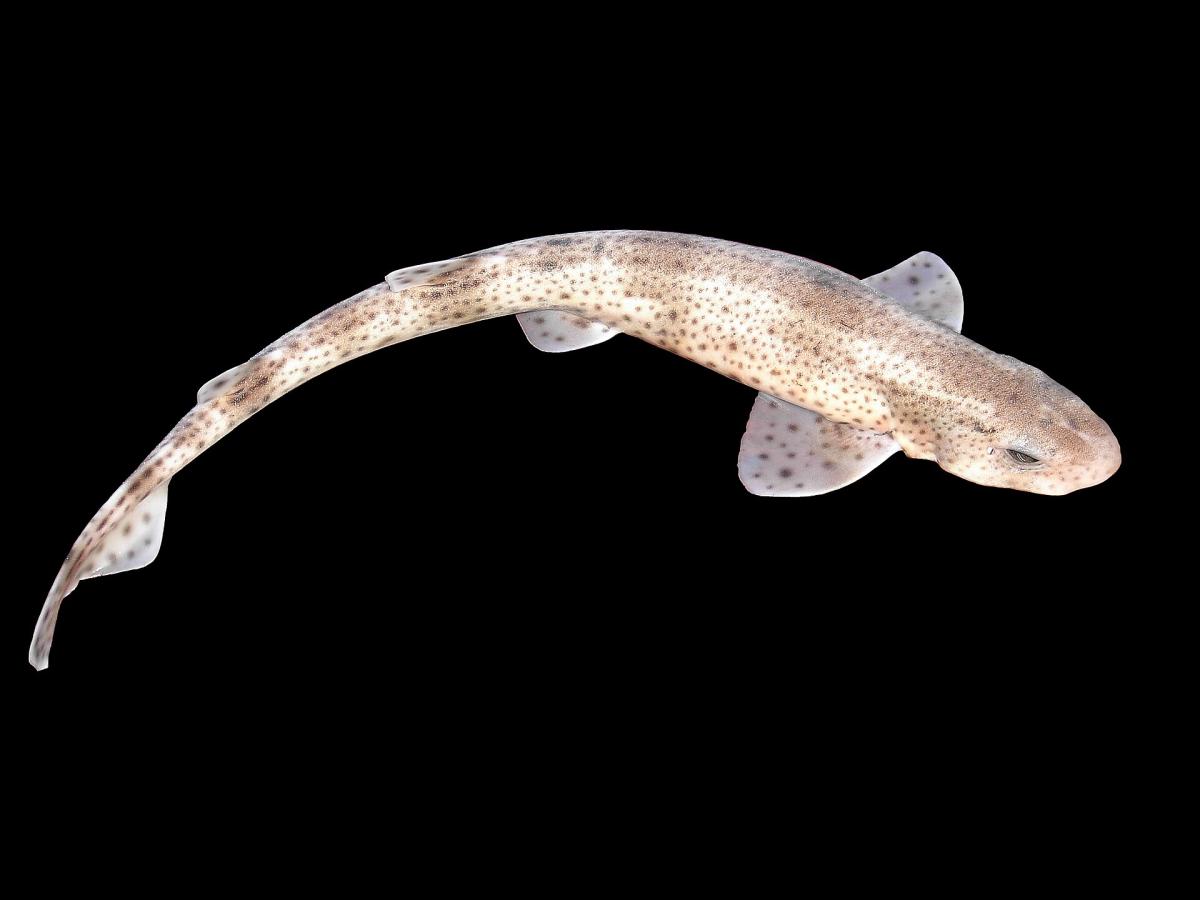
A small shark, and the 'mermaid's purse' on the strandline is very likely one of its eggcases.
A small, slender shark — also called the dogfish — sandy-brown above with dense dark spotting, a white belly, and skin so rough with tooth-like denticles that it was historically used as an abrasive. Lesser-spotted catsharks are common over sand and gravel in the Solway and Irish Sea, and are the shark most people in the region will actually encounter.
Behaviour
They hunt at night along the seabed for crabs, molluscs, worms and small fish, and rest by day, sometimes in groups. When handled a catshark curls into a ring, which is where the 'cat' of the name comes from. Females lay tough, rectangular eggcases with long curling tendrils that anchor to seaweed; the young develop inside for months, and the empty cases wash up as mermaid's purses.
When to see it
Quick facts
- Family
- Catsharks (Scyliorhinidae)
- Size
- Commonly 50–75 cm
- UK status
- Native; the most abundant small shark in British inshore waters
Photo by Hans Hillewaert, CC BY-SA 4.0, via Wikimedia Commons