Atlantic Herring
Clupea harengus
Print fact sheet (PDF)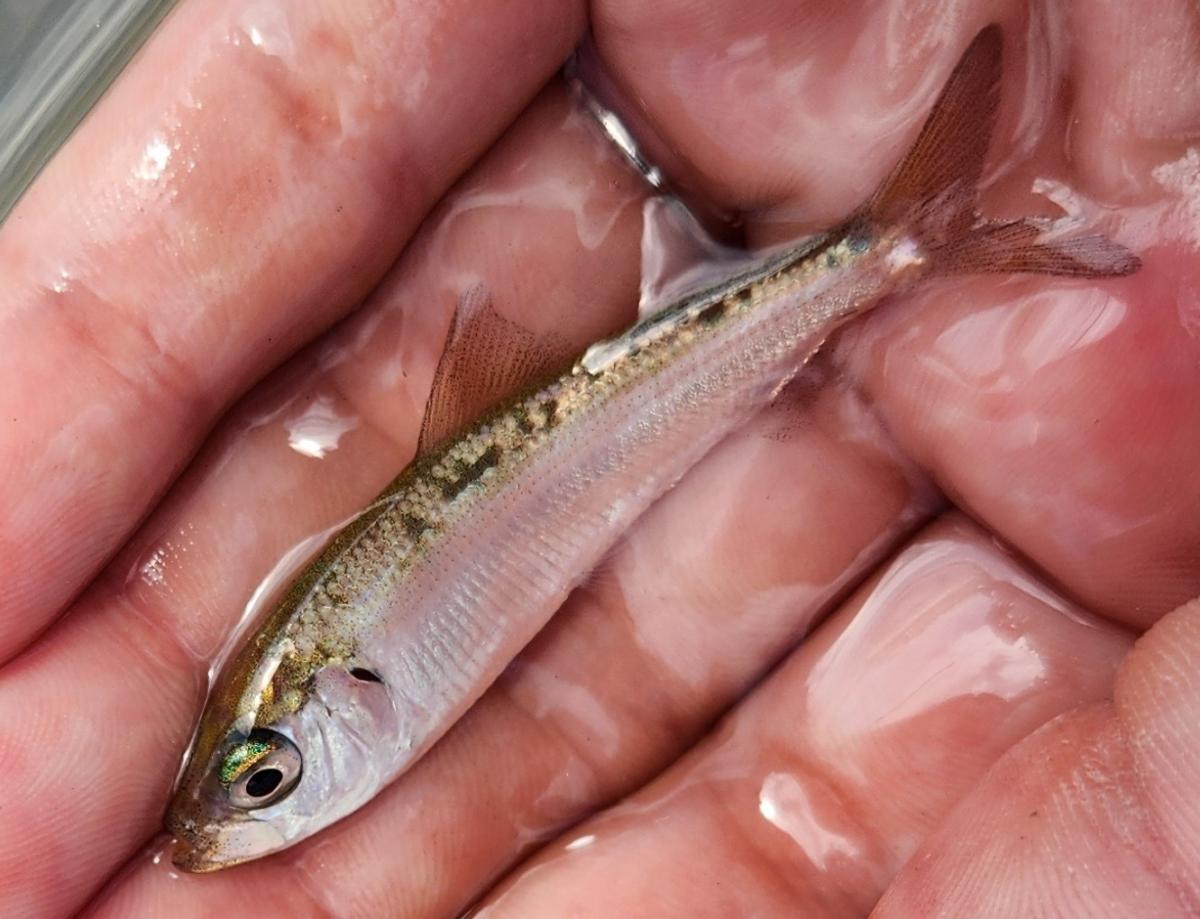
'The silver darlings' — the fish that built and then broke a whole coastal economy.
A slim, deep-bellied, brilliantly silver fish with a blue-green back, large loose scales and a single dorsal fin set midway along the back. Herring shoal in enormous numbers in the Irish Sea and Solway approaches. Few fish have shaped Scottish coastal life so directly — the herring fishery drove the economy of ports right around this coast before the stocks collapsed in the twentieth century.
Behaviour
Herring feed on plankton, filtering copepods and larvae from the water in dense shoals that move up towards the surface at night and down by day. Unlike most fish they lay sticky eggs that sink and adhere to gravel banks in vast carpets rather than drifting. Distinct populations spawn at different times and places, and each is effectively a separate stock — which is why local collapses were so hard to reverse.
When to see it
Quick facts
- Family
- Herrings and shads (Clupeidae)
- Size
- Commonly 20–30 cm
- UK status
- Native; managed as separate regional stocks after historic collapses
Photo by asiafuoco, CC BY 4.0, via Wikimedia Commons