Common Pheasant
Phasianus colchicus
Print fact sheet (PDF)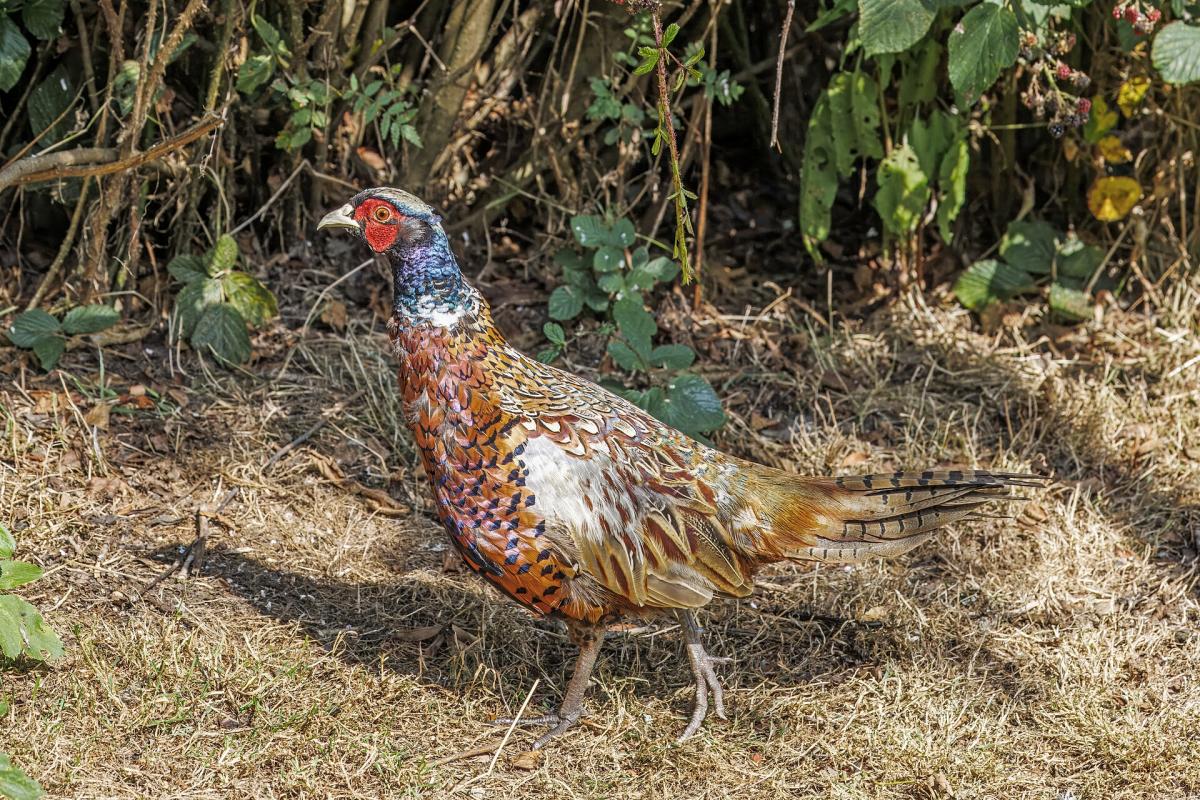
Explodes out of the verge with a clattering shriek at exactly the moment you least expect it.
A large, long-tailed gamebird introduced to Britain centuries ago and released in very large numbers every year. Cocks are unmistakable — bronze and copper, iridescent green-black head, scarlet face wattles and an extremely long barred tail; hens are mottled sandy-brown with a shorter tail. Pheasants are common on farmland, woodland edge and estate ground around Dumfries.
Behaviour
Pheasants feed on the ground on seeds, grain, shoots and invertebrates, and prefer to run from danger rather than fly, exploding into noisy flight only at the last moment. Cocks hold harems of several hens and advertise with a loud, hoarse double crow followed by a burst of whirring wingbeats. They roost in trees at night, out of reach of foxes.
When to see it
Quick facts
- Family
- Pheasants and partridges (Phasianidae)
- Size
- 53–89 cm · cocks much longer-tailed than hens
- UK status
- Introduced · not assessed
Photo by Charles J. Sharp, CC BY-SA 4.0, via Wikimedia Commons